The pharmaceutical industry has shown significant growth through mergers, acquisitions, and licensing agreements. However, large amounts of inherent risk are involved in such transactions. Thus, comprehensive due diligence in pharmaceutical industry review becomes absolutely non-negotiable.
A detailed review allows buyers and investors to make completely informed decisions. In particular, timelines for drug development are exceptionally long, and regulatory landscapes constantly change.
Therefore, there is a need to understand the real value, liabilities, and roadblocks to the target company. Lack of attention to this crucial phase may lead to losses of multi-million dollars or serious compliance problems afterward. The first step, therefore, should be to establish a comprehensive checklist.
Everything from clinical data integrity to commercial market potential should be included on the checklist. Meticulous investigation is an assurance for successful outcomes.
The Essential Due Diligence in Pharmaceutical Industry Checklist
The due diligence or critical investigation that has to be undertaken for a successful transaction needs to be structured and systematic. Due diligence in pharmaceutical industry includes several distinct, important areas:
-
- Comprehensive Review of Clinical Trial Data
What it means is that you need to scrutinize all the clinical trial protocols and their outcomes in a very detailed manner. Check for any data integrity issues, adverse event reporting gaps, or GCP deviations.
-
- Evaluating the Strength of Intellectual Property
We need to analyze all patents, trademarks, and trade secrets for their validity and scope. Finally, we should conduct a freedom-to-operate analysis to verify that a product does not violate any third-party intellectual property rights.
-
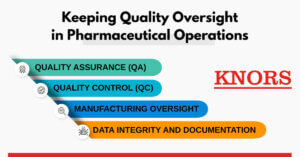
- Assessment of Manufacturing and Quality Systems
Also, carry out a detailed audit of all its manufacturing sites. Review the compliance history with Current Good Manufacturing Practices. Evaluate the quality assurance and control system’s resilience.
-
- Commercial and Market Positioning Assessment
Then, evaluate the forecasts for sales, the maximum market that the company can penetrate, and the different price policies. Acquire an exhaustive view of the rivalry in the sector. This validation stage of the due diligence process authenticates the target’s revenue projections.
A Deep Dive into Regulatory Due Diligence Pharma Requirements
The risk of regulatory non-compliance is a critical concern in pharmaceutical transactions. Thus, rigorous regulatory due diligence pharma will be necessary in the pharmaceutical sector. This includes a detailed scrutiny of the interactions of the target with health authorities.
1. Marketing Authorization Verification: Investigate the status and requirements of all authorized MAs, in other words, NDAs, ANDAs, BLAs, and so on. Confirm that any post-marketing commitments required are satisfactorily fulfilled.
2. FDA/EMA Warning Letters Review: Scrutinize all correspondence, but most importantly any warning letters, consent decrees, or Form 483 observations from global health agencies.
3. Adverse Event Reporting Compliance: Lastly, ensure the corporation establishes an appropriate pharmacovigilance system. The corporation needs to submit all SAEs in a timely and accurate manner.
4. Promotional Material Review: Review advertising and promotional practices for compliance with approved labels. Promotion in violation may invite severe enforcement activities against such promotion.
5. Audits of adherence to GCP/GLP/GSP/cGMP: More specifically, perform deep dives of the documentation associated with the practice of GLP, GCP, GSP, and cGMP. This gives assurance that operational quality standards are adhered to. This process constitutes the backbone for comprehensive regulatory affairs due diligence.
Key Pillars of Due Diligence in Pharmaceutical Industry
Any deal would be considered successful only if it has achieved financial stability and commercial viability. Financial due diligence in pharmaceutical industry is much more than plain accounting.
- Justify all revenues reported through the analysis of the sustainability of the earnings and their source.
- The report should depict product profitability, taking into account direct costs of products sold and gross margins realized on the key products.
- Analyze contingent financial liabilities that are off the balance sheet, such as litigation reserves and the corresponding financial obligations.
- Authenticate supply chain contracts and identify their effect on future costs.
- You have to detail the anticipated cash flows along with capital expenditures that will be required to either maintain or grow the business.
- Check the existing insurance for product liability and operational risks to make sure the protection level is sufficient.
- One should check the history of tax compliance and any possible tax liabilities resulting from past activities.
- Review commercial contracts, particularly those with a PBM or a Group Purchasing Organization, for their termination clauses.
For this reason, companies usually outsource such in-depth financial and commercial analyses as part of full-service due diligence pharma services.
Integrating IP and Technical Review with Regulatory Due Diligence Pharma
The complexity of pharmaceutical assets is such that reviewing them requires a multidisciplinary approach. In this respect, proper regulatory due diligence pharma must be performed together with technical and intellectual property assessments. Technical review involves estimation of formulation stability, validation of the manufacturing process, and the ability to scale up.
Even a poor manufacturing process that may happen to be compliant today may indeed fail when upscaled to larger commercial scales. And thus pose a serious risk in the future.
On the other hand, the IP review will determine how well the asset is protected in the world, with a view to future market exclusivity.
In this respect, such an integrated approach serves to ensure that we have identified any value erosion points. Reputable due diligence pharma services providers like Knors Pharma specialize in connecting these disparate data streams toward a single risk profile.
Final Thoughts
Due diligence in pharmaceutical industry represents one of the most important risk mitigation strategies and not just an administrative task. It ensures that the buyer gets a clear and unaltered view of the target’s technical, commercial, and regulatory affairs due diligence status.
Consequently, pharmaceutical/biotech/life sciences companies need to invest deeply in expert, multi-faceted teams for this process. Knors Pharma is one of the reliable regulatory affairs consulting company in India. Ultimately, a detailed investigation ensures the deal provides maximum strategic value and stakeholder protection.
Frequently Asked Questions (FAQs)
What is the main objective of technical due diligence in the pharmaceutical sector?
In addition, it reviews the manufacturing process in terms of feasibility and scalability. Thus, it ensures that pharma companies will produce the drug in large quantities according to quality standards.
Why do companies often seek external expertise for their due diligence?
Outsourcing the work provides fair and unbiased experts, professional know-how, and faster review in the otherwise time-consuming legal, financial, and technical areas.
How does intellectual property (IP) factor into pharmaceutical due diligence?
The review of IP confirms patent exclusivity and freedom-to-operate and protects the market position. It is associated with the revenue stream of the product at issue from immediate generic competition.
What specialized assistance is covered by “due diligence pharma services”?
Specialized consulting services of firms aimed at helping companies with in-depth, systematic reviews across all relevant pharmaceutical domains in advance of a major transaction.