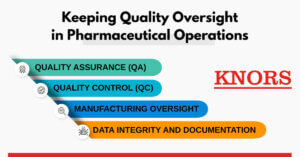
Quality has always been the top priority for the modern pharmaceutical industry. The implementation of QbD in pharma Industry has ensured that all drugs are of the highest quality & meet the quality requirements defined at the onset. This is quite different from the traditional testing methodology. In this methodology, quality is built into the manufacturing process itself. However, this requires constant monitoring and adherence. This is where the audits play a vital role. These audits are the bridge between theory and practice.
By conducting audits, the company is well aware of the potential risks and how they might affect the final product. Audits are designed to ensure that a company adheres to global safety rules with a view to enhancing their efficiency.
Understanding the Role of GMP Audits in the Enhancement of Quality by Design (QbD) in the Pharma Industry
GMP audits are the checks and balances required by the company to ensure that the design controls are working as planned. This ensures that the manufacturing parameters are always within the defined design space. This prevents all potential problems that might arise during the manufacturing process. These audits also provide a roadmap for the company’s improvement. Using QbD in pharma Industry allows for a more scientific approach to production.
– Auditors check the design space and ensure that the company has the required flexibility.
– Auditors also inspect the consistency of the critical quality attributes.
– Additionally, auditors evaluate how well the risk assessment instruments work.
– Auditors also check the quality of the raw materials and ensure that they are of the highest quality.
– Auditors also verify the accuracy of the analytical tools.
– The audits also help the company develop a culture of transparency.
Key GMP Audit Practices That Support Effective QbD Implementation
Consistent Risk Assessment Reviews
Auditors assess how well a company assesses potential failure modes in the production process. Auditors seek evidence of risk mitigation strategies implemented by companies. This ensures that quality is never a matter of chance.
Data Integrity and Accuracy Checks
Pharma companies have moved from a paper-based system to a digital system recently. Therefore, auditors assess whether data is traceable and permanent in nature. This ensures that there is a scientific basis for QbD in pharma Industry implementation.
Equipment Calibration and Validation
Well-maintained equipment is necessary to produce consistent results in drug formulation. Auditors assess whether equipment is within specified limits by referring to equipment logs. This ensures that there is a high degree of consistency in drug formulation.
Process Capability Analysis Reviews
Auditors assess statistical data to evaluate whether a process is in control or not. Auditors look for trends that may lead to a process being out of control. This ensures that high standards are maintained in QbD in pharma Industry.
How GMP Compliance Aligns with QbD Principles in Pharmaceutical Manufacturing?
GMP Compliance and Quality by Design are complementary aspects of each other. QbD is about understanding how and why a drug formulation process works, whereas GMP is about executing it in real life. Without GMP compliance, a quality by design process will fail in mass production, irrespective of how well it is designed.
– Both GMP and QbD try to avoid errors by implementing a set of standards in a pharmaceutical company.
– They require detailed documentation of every step of manufacturing, including any deviation.
– GMP is the system that holds QbD designs accountable.
– Consumer safety and therapeutic benefit are their goals.
– Continuous monitoring is a common requirement of both GMP and QbD.
Furthermore, integrating these two systems would help companies avoid huge financial losses. In India, if one batch is rejected, companies have to face a financial loss of between ₹15,00,000 and ₹50,00,000. Thus, by adhering to these guidelines, companies can avoid such huge financial expenses. Staying updated with QbD in pharma Industry protocols is essential for financial stability.
Challenges and Solutions in Integrating QbD Through GMP Auditing Processes
Challenges
1. High costs of setting up sophisticated analytical labs.
2. Lack of skilled professionals to deal with advanced QbD techniques.
3. Difficulty in handling huge amounts of data related to real-time manufacturing processes.
4. Companies that have traditionally adopted a “test-and-release” approach often exhibit resistance to change.
5. Different interpretations of guidelines by various global markets/regions.
6. The complexity of defining the design space for biological products.
7. The time-consuming process of conducting thorough, risk-based audits of all batches.
Solutions
1. Investing in data management software.
2. Conducting training sessions for employees about QbD.
3. Implementing QbD gradually to avoid huge expenses.
4. Seeking help from experts to bridge the knowledge gap between QbD and traditional techniques.
5. Adopting Real-Time Release Testing (RTRT) to avoid waiting periods.
6. Creating a checklist of audit parameters to ensure uniformity across all departments.
7. Developing a fund specifically allocated to R&D.
The Bottom Line
Thus, in conclusion, GMP audits are essential tools required to ensure the successful implementation of QbD in pharma Industry. Quality is not just a concept but a reality that is ensured through GMP audits. KNORS Pharma provides a third-party evaluation (gap analysis) of pharmaceutical manufacturers using their professionally designed tool. This is a unique service that aids pharmaceutical companies in seamlessly adapting their processes to global standards. Therefore, investing in strong auditing processes today is essential to ensure a profitable tomorrow for the pharmaceutical world.
Frequently Asked Questions
Q1. What is the main goal of QbD?
The main goal of QbD is to ensure high-quality medicinal products. QbD is all about understanding the product and process.
Q2. How do GMP audits help pharma companies?
GMP audits help pharmaceutical companies by identifying gaps within their processes and ensuring strict compliance with safety regulations.
Q3. Is QbD mandatory for all pharmaceutical products?
Although QbD is not mandatory, pharmaceutical companies can greatly benefit from its implementation. The FDA highly recommends QbD, as it significantly reduces the time required to pass drug approval.
Q4. What is the cost of a batch failure in India?
The cost of a batch failure can vary between 15 lakhs to 50 lakhs, depending upon the quantity and type of medicine.
Q5. How often should GMP audits be conducted?
Internal audits have to be conducted at least once or twice a year, depending upon the processes.
Q6. Can small companies implement QbD effectively?
The answer is yes; small companies can do this through a focus on key steps first, often through external consultants to handle technical aspects.
Q7. What are Critical Quality Attributes (CQAs)?
Critical quality attributes are physical or chemical properties that must remain within certain limits. This is to ensure that the drug is safe and effective for the patient.